
NYFF 2025 Film Review: Resurrection
OUR CELLULOID AFTERLIFE
Better to be a corpse and dream than to live forever and not. And movies are how we dream. Bi Gan’s behemoth is an ode to the artform and a lamentation of our times, carving a path through image-making history. Resurrection is a fever-dream time capsule of the last century of cinema, a hundred-year fugue state disguised as a five-part anthology of dreamers and desire. Somewhere between somnolent and peculiar, it's confirmation that the Chinese filmmaker is one of the strangest, most vital visionaries working today. Minor spoilers ahead…
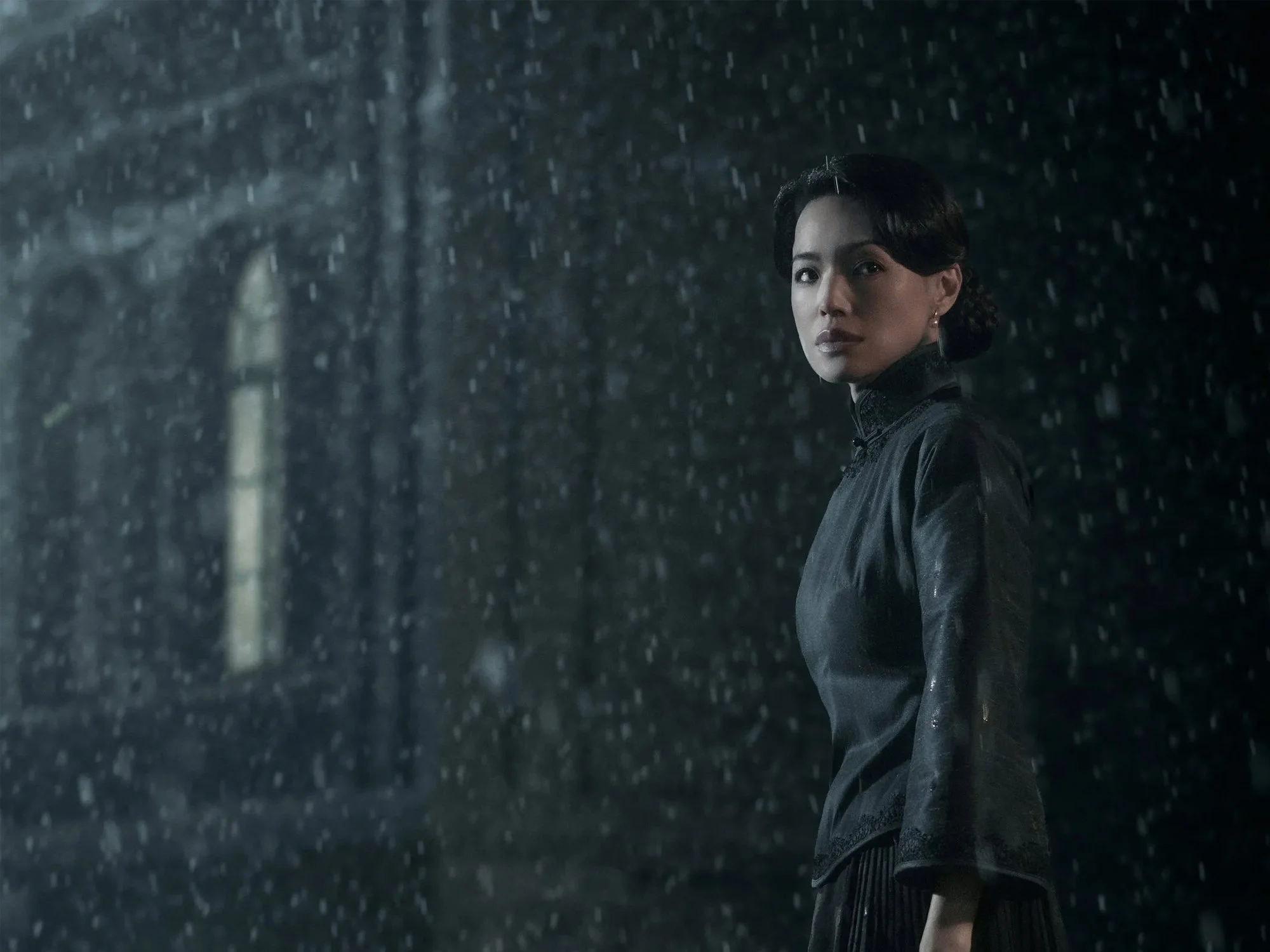
Andrei Tarkovsky died in 1986. Three years later, Bi Gan was born. It's a cosmic handoff that feels almost too neat for a filmmaker so preoccupied with reincarnation, but watching Resurrection - winner of a special jury prize at this year's Cannes - it's hard not to buy into the mysticism. There simply hasn't been another director since the Russian auteur so committed to the idea that a movie can feel like a dream rather than merely depict one, all shifting gravities and half-remembered logic. Bi has long worn his devotion to Tarkovsky's 1979 Stalker on his sleeve, and Resurrection borrows that film's trick of smuggling existential inquiry inside genre scaffolding. But where Tarkovsky was interrogating faith in humanity, Bi is after something narrower and stranger: faith in cinema itself, and the century-long, ever-shifting love affair we've had with moving images.
Resurrection arrives dressed in the faded color and painterly artifice of an early-20th-century silent picture, before Bi starts dismantling the very tricks that built the illusion — forced perspective, overlapping sets, and fantascopes flickering with the fundamentals of motion itself. Era-appropriate title cards explain the rules: humanity has traded dreaming for longevity, and those who still dream are hunted down and put to death, because dreaming — like cinema — refuses to move in a straight line. It's a wobbly-but-effective conceit - gossamer-thin by design - mostly useful as scaffolding for Bi to string together five semi-connected dream-sequences, each belonging to a single restless dreamer (Jackson Yee).
Bi Gan’s last two films, Kaili Blues and Long Day's Journey Into Night, were both studies in people coming unmoored from time — the latter famously detonating into a nearly hour-long unbroken 3-D dreamscape. Resurrection takes that same ambition and multiplies it across its peculiar vignettes. The film opens with Murnau-esque expressionist terror, all oppressive shadow and monstrous pathos, before lurching into a neon-choked noir about a missing theremin in a decaying megacity. From there it becomes an absurdist parable about opportunistic tomb looters and a father reincarnated as an extracted tooth, then settles — however briefly — into a comparatively straightforward melodrama about a budding telepath. Every register shift feels less like an anthology and more like flipping through a century of film grammar in a single unbroken breath.
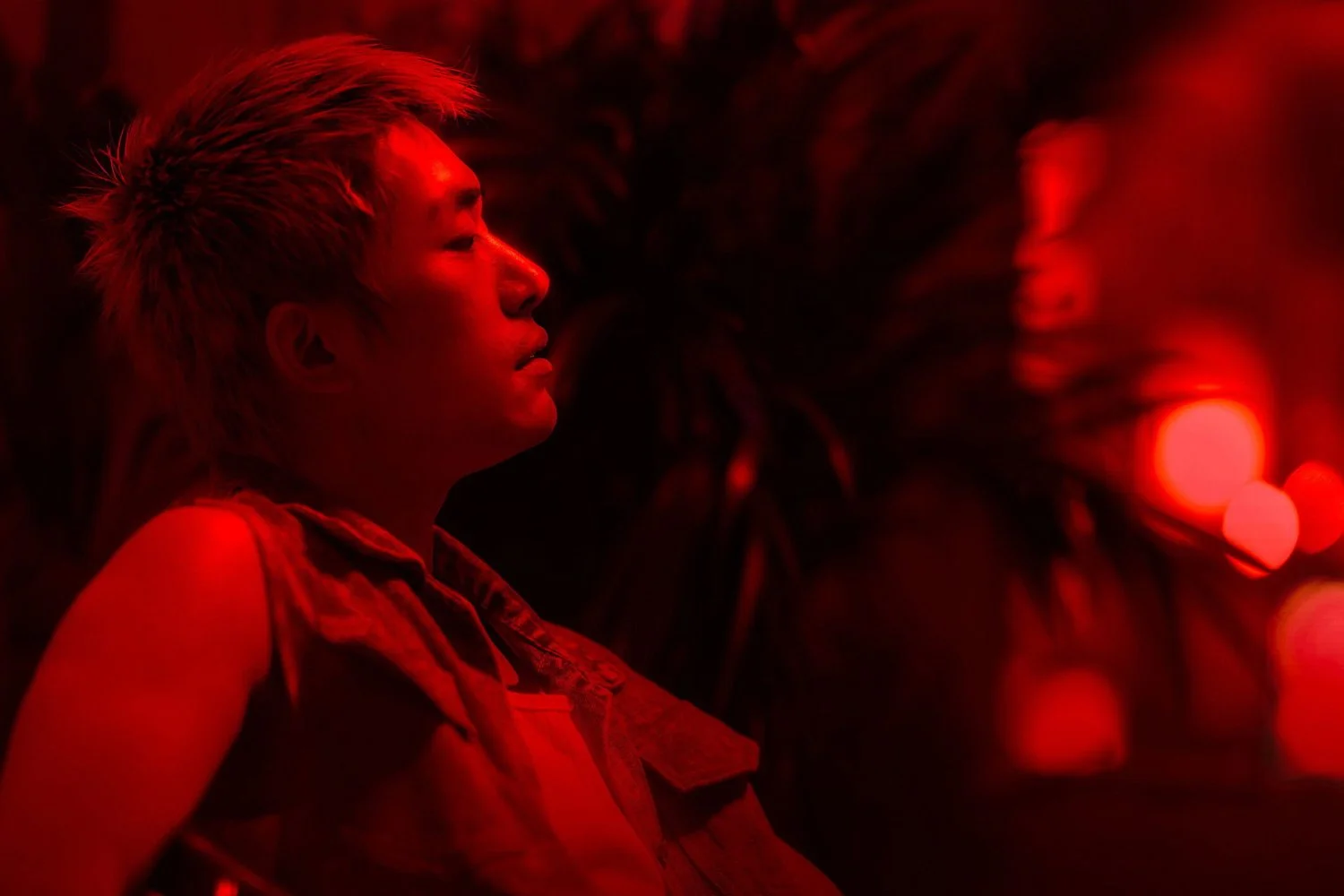
"Resurrection presents creative imagination as a revolutionary force, fighting against the constraints of the literal."
Bi’s most accomplished feat within Resurrection, however, is its final 33-minute long single take: a fifth and final dream inhabiting a ghostly, spectral camera trailing a couple through a rain-soaked city on New Year's Eve, 1999. Figuratively set on the event horizon of millennial optimism and a scrying dread, Resurrection’s final trick spins mind-boggling technical wizardry to solely service its miniature doomed romance: stairwells fold into buildings, lens switches mid-take, and a silent film projected on a bedsheet in a back alley somehow plays at a "normal" speed while the world around it seems to blur past at ten times that rate. What makes Resurrection so disorienting isn't just its shapeshifting structure but the way Bi and cinematographer Dong Jingsong render the transitions between dreams as their own kind of illusion of contradictory image-making.
Resurrection isn't interested in coherent narrative, and it would be a mistake to chase one. What unifies its five dreams instead is desire, made flesh in increasingly strange forms - a cyborg "dreamer" that runs on spooled film, a burnt love letter reconstituted by peering backward through time. Bi starts in the silent-era, threads in evocation of Man with a Movie Camera, and lands somewhere in a Style Moderne future that feels genuinely untethered from the physical world - folding the entire history of cinema into a single, inescapable loop as both eulogy and nativity. Better to be a corpse and dream than to live forever and not.