
NYFF 2025 Film Review: Magellan
LAV DIAZ FINDS THE END OF HISTORY IN A SINGLE MAN'S AMBITION
Lav Diaz's reputation for inaccessibility has always been a matter of runtime, not comprehension — his films are classical narratives told at a geological pace, patient rather than opaque. It's fitting, then, that Magellan, at a comparatively brisk two and a half hours, is simultaneously his most "accessible" work and his least conventional: less a story than a series of tableaus, an art installation masquerading as a costume epic. Gael García Bernal anchors a docu-drama about the birth of an empire, and the result is one of the year's most quietly devastating history lessons. Minor spoilers ahead…
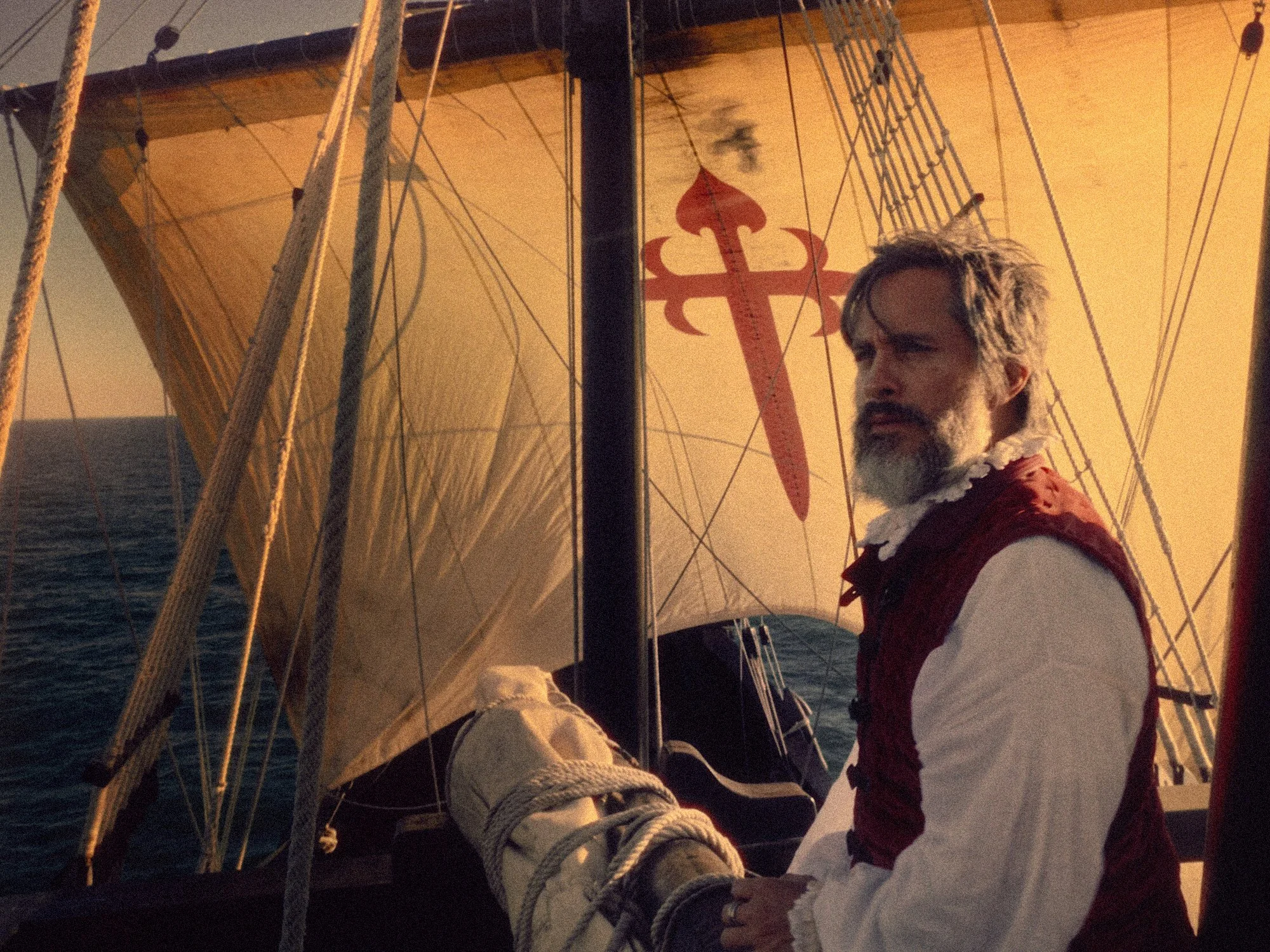
There's a persistent myth that Lav Diaz makes films you endure rather than watch, that the eight-hour runtimes are a barrier to entry rather than an argument in themselves. Magellan dismantles that myth simply by being short, at least by Diaz's standards, and in doing so reveals what was true all along: the Filipino auteur has never been interested in obscurity, only accumulation. Here, freed from the sprawl of his usual canvases, Diaz strips his method down to its bones - juxtaposition as its own form of thesis - and the effect is less narrative than incantation, a historical recreation told entirely through the friction between images.
The film opens with the aftermath of the 1511 seizure of Malacca, beaches and jungles gorgeously strewn and thick with corpses so there's no mistaking these expeditions for anything but greed with a flag attached. From there, Diaz drags viewers through the full unglamorous cogs of conquest: bureaucracy and rigamarole giving way into slavery, mutiny, and pox. Rendered in long, real-time takes with almost no dialogue, Magellan deploys the winds and creaking sails as sensory documentation more than storytelling: by the time Ferdinand Magellan (Gael García Bernal) meets his end at the Battle of Mactan in 1521, the Spanish expansion he represents has been so thoroughly exposed as a lie that the film's late turn toward elemental, unpeopled beauty feels more like release than terminus.
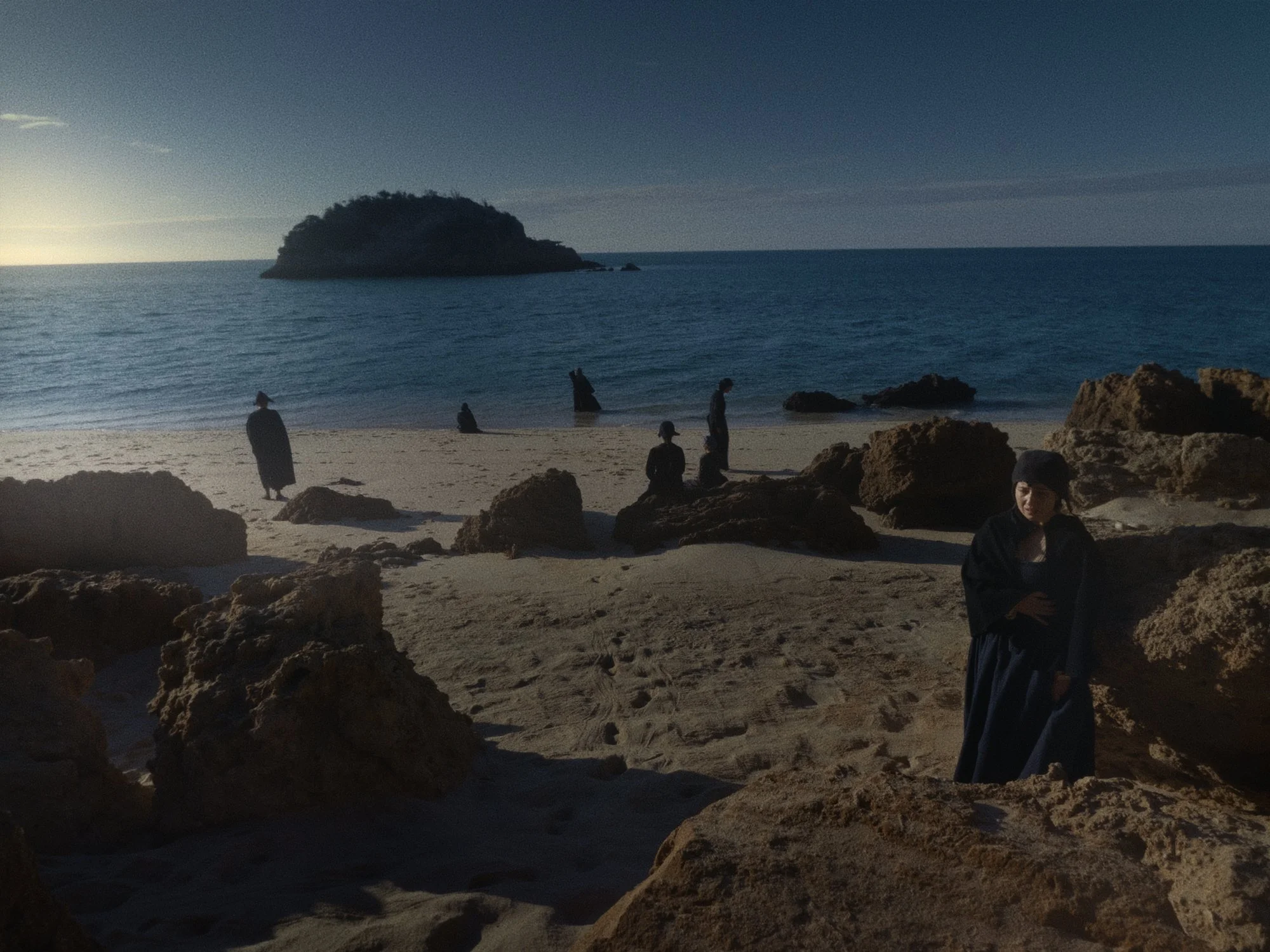
“…the effect is less narrative than incantation, a historical recreation told entirely through the friction between images.”
Magellan’s biopic framework belies its thornier power: Ferdinand Magellan , the Portuguese navigator who sold Spain on a westward route to the spice islands, sails into the Philippines and dies there, run through on a beach he thought he'd conquered. But Magellan has little use for the mechanics of historical epic. Instead, Diaz builds his film as a sustained collision - the explorer's own mythology cut against the lives of the colonized and the laborers beneath him until the two stop feeling like separate stories and start feeling like the same transgression, viewed from opposite ends. The whole film runs on this rhythm: During the long voyage sequence, Diaz cuts between the ship's architecture - hulking, totemic, a monument to conquest - and Magellan's escalating cruelty toward his own crew. Later, landing in the Philippines, Bernal's Magellan is filmed in silhouette against the sun itself, a man remade into myth by his own backlighting.
What keeps Magellan from curdling into simple hagiography-in-reverse is its refusal to flatten anyone into a symbol. Magellan is also a man fleeing his Portuguese superiors, chasing the same freedom he denies everyone around him; colonialism, Diaz suggests, hollows out its architects as thoroughly as its victims. Diaz isn't interested in absolution for anyone. He's interested in the human need for something - anything - to believe in, and how easily that need gets weaponized. It's a fitting bookend for a film that plays like an origin story for the modern world's oldest, best-disguised lie: that discovery and destruction were ever two different things. Magellan set out to sail around the world. What he found, instead, was the end of history. I suspect that many will find Magellan - even as one of Lav Diaz’s shortest films - excruciatingly languid and asymmetrical, but I felt a stirring power behind its melange of classically painted tableaus, unsightly realism, and harrowing depictions of colonizer violence. There are those that will simply see this as an endurance test, but real heads will likely all have the same complaint: this should’ve been longer. Dialectic cinema at its best.